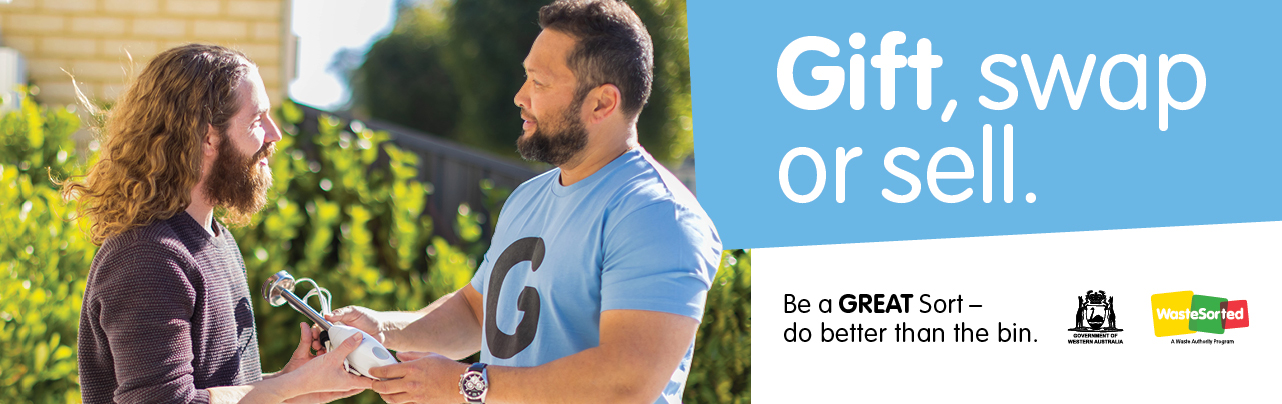
Gift: The first step of the GREAT Sort hierarchy is around gifting, swapping or selling, with the aim to keep high-value household goods in circulation before they ever reach a bin. Gifting prevents usable goods from taking up finite local landfill space, slashes community emissions from manufacturing replacements, and provides affordable essentials to neighbors and local families.
Items in clean, working condition don't belong in the bin. Keep resources circulating locally by gifting them to charity, swapping or selling them.
Find your nearest registered charity store or donation drop-off point via Charitable Recycling Australia's website, or connect with neighbours through local Buy Nothing groups, clothing swap meets or community buy/swap/sell boards.
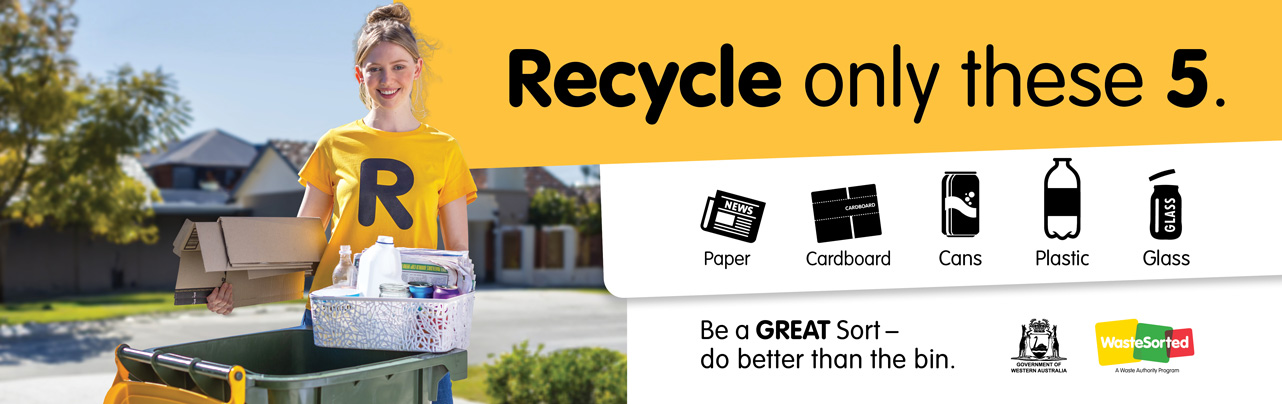
Recycle: When it comes to recycling, stick to the essential five.
In Western Australia, yellow-lid kerbside recycling focuses exclusively on five clean, loose materials: paper, cardboard, cans, rigid plastic containers/bottles and glass jars/bottles. Sticking strictly to these five prevents facility contamination and machinery breakdowns at regional Materials Recovery Facilities (MRFs)
Items must be loose (not contained in boxes or bags), lids removed and free from contamination such as liquids, food residue and excessive tape, for example.
Many beverage containers between 150ml-3L can be recycled at a Containers for Change refund point. Click here to learn more.
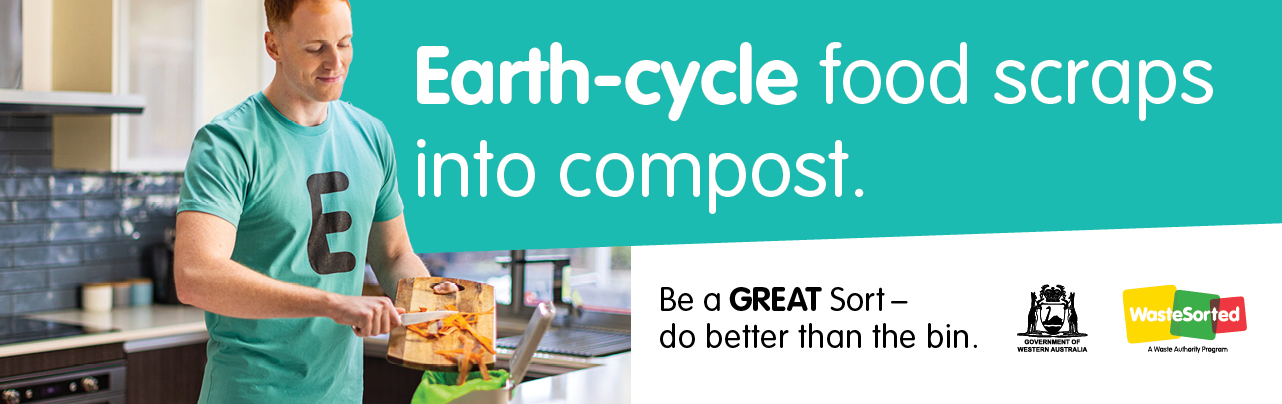
Earth-cycling: Keeping organic matter, food scraps, peels, leftovers and garden prunings out of landfill. When trapped under tonnes of rubbish without oxygen, organic waste breaks down to produce methane, a greenhouse gas significantly more potent than carbon dioxide.
If you have sufficient space at home, and a bit of time, it's easy to turn food scraps and garden waste into compost. Little space is required to maintain a worm farm or bokashi bin, which are very efficient ways of processing food waste. What's more, both methods produce products which can boost the soil and garden health. Garden and food waste can be disposed of through your FOGO bin if you don’t have the time, space or means to compost.
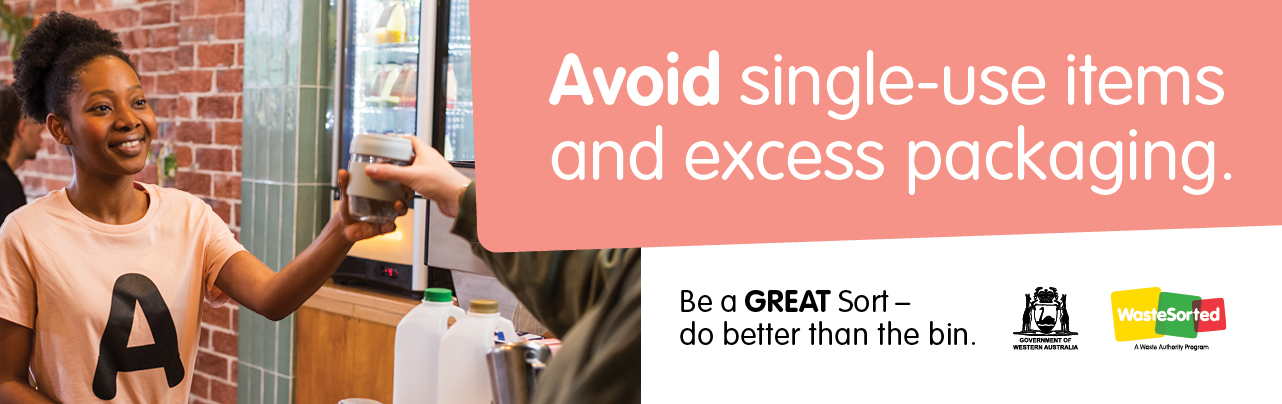
Avoid: The highest priority on the waste hierarchy! Preventing waste at the checkout eliminates upstream manufacturing footprints, lowers household grocery expenses and drastically shrinks the volume of rubbish hitting red-lid general waste bins.
Meal-plan before shopping to avoid food waste, bring BYO reusable produce bags and containers, and prioritise durable, repairable items over short-lived goods.
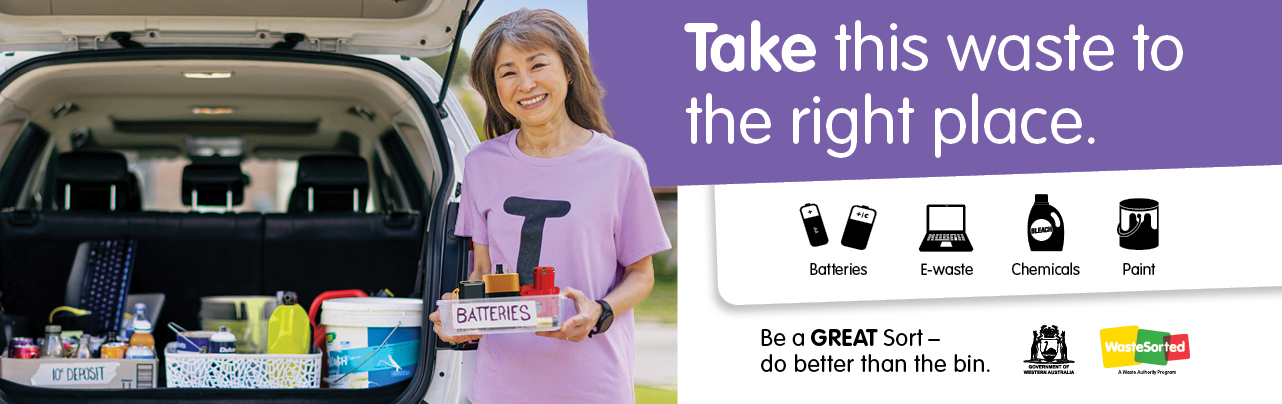
Take: Hazardous materials, electronics and specialty items should never enter any kerbside bin. Batteries, paint and chemicals cause severe fires in collection trucks and recycling facilities, while electronic scrap leaches toxic heavy metals if landfilled. Check what the Town considers hazardous here. You can also check for drop off points here.
This helps protects collection drivers and processing staff from explosive battery fires, keeps toxic leachate out of local groundwater, and recovers critical raw minerals (lithium, cobalt, copper).